

The Oasis: How the UAE Became West Asia’s Fulcrum of Transformation
- News
 Global Business Magazine
- 7 minutes read
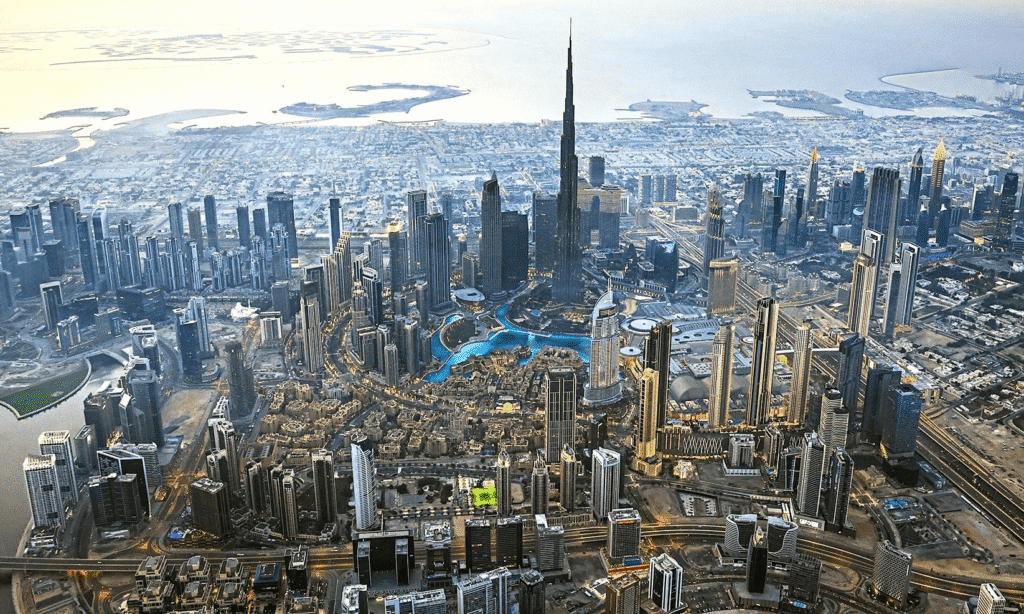
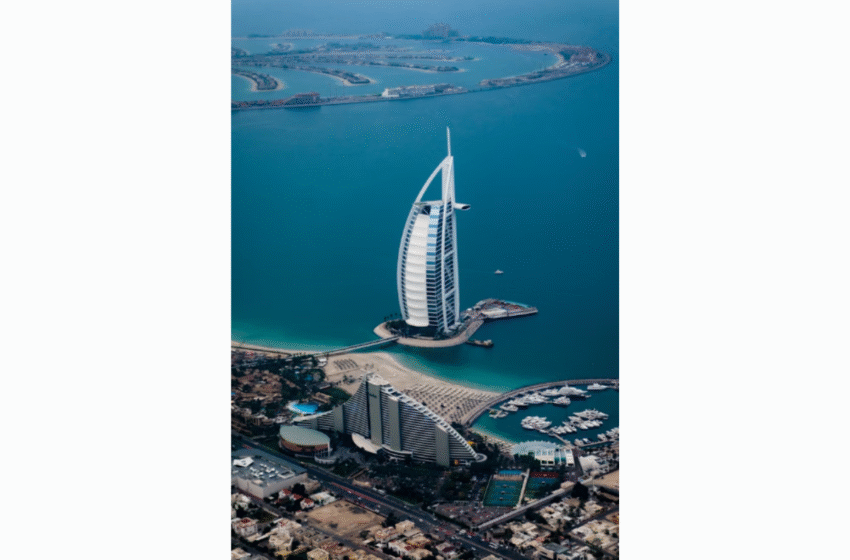
Abu Dhabi — For decades, commentators have blamed a perceived “knowledge deficit” for parts of the Islamic world lagging behind in technology, modern intellectualism and high-value industries. The United Arab Emirates refuses to be boxed into that narrative. In a single generation, the country has remade itself into a magnet for capital, talent and research — not by accident, but by design. The UAE is quietly positioning itself as West Asia’s fulcrum of transformation: a place where public strategy, private ambition and intellectual renewal meet at scale.
The proof is no longer just rhetoric. From mandatory AI classes in government schools to world-class research partnerships in AI and robotics, the UAE is building the knowledge foundations that historically eluded many countries in the region. In 2025 alone the government rolled out sweeping education reforms and launched international R&D collaborations — moves that signal a deliberate pivot from resource rents to human capital and ideas.
What makes the UAE different is the speed and coherence of its approach.
Compare fragmented reform programs elsewhere with the UAE’s ecosystem thinking: ministries co-design curricula, sovereign and private capital seed research institutes, and multinational tech firms are invited into long-term labs rather than one-off partnerships. The result is an infrastructure that turns isolated innovation pilots into reproducible national capacity. The Abu Dhabi–Nvidia AI and robotics lab, for instance, is not a PR stunt — it is part of a broader strategy to localise cutting-edge compute and skills, and to anchor talent in the Gulf.
Education is the most visible front!
The UAE’s decision to introduce AI as a mandatory element across government school curriculum — from kindergarten through Grade 12 — is ambitious and symbolically important. Teaching children the fundamentals of algorithmic thinking, ethics and applied AI signals a generational shift: this is about creating citizens who can both use and critique technology, not just consume it. Complementary initiatives — like free subscriptions to advanced AI platforms for university students and teacher training programs — show the state understands that technology must be married to pedagogy.
Translation matters too.
Universities and research institutes in the UAE are no longer only hubs for foreign branch campuses; they are becoming incubators for domestic problem-solving. From biomedical labs speeding vaccine R&D to logistics and fintech startups building region-specific platforms, the UAE is aiming for intellectual outputs that matter to local economies. The Knowledge Project and the creation of national Centres of Excellence demonstrate the attempt to move beyond headline investments to sustained capability building.
There are strategic economic reasons behind this push.
The IMF and other institutions now forecast robust growth for the UAE in 2025, with non-hydrocarbon activity powering much of the expansion. Diversification isn’t an abstract policy goal here: it’s the operational plan that shapes every major decision — visa rules to attract talent, grant schemes for startups, and even partnerships with global cloud and chip providers to secure computing infrastructure. A functioning knowledge economy requires stable macro conditions, and the UAE has been deliberately tightening that macro-policy thread while betting heavily on skills and tech.
Yet a cautionary note is necessary.
Building a knowledge economy is not the same as instantly creating one. Successful translation from capability to widespread productivity gains requires a broad entrepreneurial base, predictable governance, and freedoms for independent scholarship and critique. The danger is performative progress — glossy labs and headline MOU’s that do not change the underlying incentives for risk-taking, private R&D, and open intellectual inquiry. In short: institutions must protect the messy business of disagreement and failure if deep learning — intellectual and institutional — is to take root.
Another practical challenge concerns inclusivity.
The UAE’s population mix, heavy with expatriate expertise, creates a global talent market inside national borders. That’s a strength. But for the knowledge transition to be a genuine national transformation, opportunities must diffuse widely — into local SMEs, regional cities, and into segments of society that have historically been marginalised. Programs that tie AI education to local problem-solving — finance literacy for youth, applied robotics for industry clusters, and public-facing R&D — will determine whether the nation’s intellectual gains become shared prosperity rather than a narrow technocratic elite.
There is also a geopolitical dimension to this story.
The UAE’s model — opening its markets, creating lightly regulated zones for creative experimentation, and offering incentives for global firms to co-invest — has created a template other states will watch closely. If Abu Dhabi and Dubai can anchor critical tech capabilities in the region (from data centres and advanced chips to AI labs and talent pools), they will simultaneously underwrite economic resilience and shape geopolitical alignments in West Asia’s shifting architecture. That influence is soft power in its most modern form: intellectual gravity rather than military projection.
The most compelling evidence that the UAE is becoming a regional fulcrum is how private actors are responding. Global cloud providers, semiconductor companies, and research universities are not merely opening offices — they are embedding long-term partnerships, offering scholarships, and seeding local startups. That indicates confidence in the UAE’s regulatory stability, access to markets, and the potential for homegrown innovation. It also means the country can start moving up value chains — from hosting global platforms to producing proprietary technologies and talent that can scale across the Arab world.
Economist view
Economists watching the region mix praise with prudent realism. James Swanston, senior Middle East economist at Capital Economics, notes that strong non-oil growth and policy reforms are boosting the UAE’s prospects — but he warns that sustaining momentum will require continued structural reform and private-sector dynamism rather than short-lived fiscal pushes. For a measured take on the UAE’s macro outlook and the limits of policy alone, see the Reuters summary of regional forecasts and expert commentary.