

Baghdad’s airport deal is Iraq’s quiet bet on normalcy — and it just might pay off
- Featured News
 Global Business Magazine
- 7 minutes read
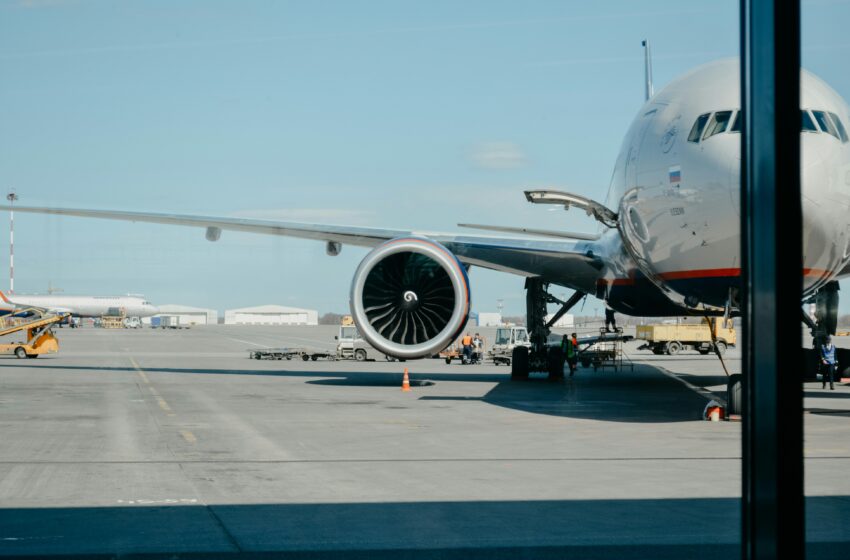
Baghdad has never needed symbolism more than it does today. The Iraqi Cabinet’s decision to hand a major rehabilitation, development and operations contract for Baghdad International Airport (BIAP) to a CAAP-led consortium is exactly that kind of signal: loud, practical and aimed squarely at convincing airlines, investors and citizens that Iraq is open for modern business. On paper the numbers look sensible — the winning bid carries roughly $764 million in planned investment and, according to government statements, will return 43.05% of airport revenues to the state — but the significance goes far beyond balance sheets.
Why this matters
Airports are more than runways and lounges; they are economic synapses. A modern, well-run BIAP would unclog logistical bottlenecks, boost tourism and pilgrimage flows, and make Baghdad more attractive for the sort of corporate flights and cargo operations that underpin regional trade corridors. This is particularly true for Iraq, where decades of underinvestment in civil infrastructure have repeatedly been cited as a drag on growth and private-sector confidence. The involvement of the International Finance Corporation (IFC) as lead transaction adviser — a body that specializes in structuring deals in fragile states — is itself part of the value proposition: it signals that international best practice governed the tender.
The winning consortium: who they are and what they promised
The consortium led by Corporación América Airports (CAAP) and local partner Amwaj International emerged as the preferred bidder after competing consortia from Turkey, Saudi Arabia and the UK, among others. The government statement and reporting from several outlets put the investment figure at roughly $764m with plans for a new modern passenger terminal — initially targeting capacity in the single-digit millions per year — and a reported 25-year concession under which the private partner will rehabilitate, expand and operate the facility. CAAP’s offer reportedly included the highest percentage share of operational revenue to the central treasury, a critical factor in the selection.
A pragmatic experiment in public-private partnership
Let’s be blunt: PPPs in fragile or post-conflict states are not guaranteed successes. They succeed or fail at the seams — in governance, transparency, security and the often-underappreciated task of coordinating dozens of ministries, local contractors and international financiers. Yet this transaction checks many of the boxes that increase the odds of success: competitive bidding, an IFC-backed process, multiple prequalified international consortia, and a sizeable private capital commitment that, crucially, does not saddle the state with upfront costs. That structure reduces fiscal exposure while importing managerial expertise — a sensible trade if the government is ready to oversee enforcement of standards and guard against political interference.
Risks that still need managing
No sugarcoating here — Baghdad faces risks that a glossy contract cannot erase. Security shocks, political brinksmanship in Baghdad’s corridors of power, and the perennial problem of local procurement capture can slow or neutralize even the best technical plans. There is also the social question: long concessions can provoke public pushback if citizens perceive airports as being “privatized” for foreign profit without local benefits. The government will need to insist on clear local-employment targets, transparent cost-oversight and visible reinvestment of a portion of revenues into local infrastructure to keep the political compact intact. These safeguards are not optional add-ons; they are central to making a 25-year plan politically durable.
Why the timing is astute
Iraq’s economy remains heavily oil-dependent, but the government has signalled a sustained pivot toward wider investment and reconstruction projects in 2025. Global logistics and aviation markets are re-expanding, and the wider region — from the Gulf to Turkey — is investing in connectivity. Modernizing BIAP now allows Iraq to capture a share of that growth rather than playing catch-up after competitors strengthen their own positions. Moreover, the psychological impact of a functioning, welcoming international gateway for visitors and investors is disproportionate: it reframes conversations from “fragile state” to “rebuilding market.”
What success should look like
A tranche of new facts would convince sceptics: faster and safer passenger processing, reliable cargo throughput, regular new airline routes (including low-cost carriers and regional connectors), and a terminal that is not a recurring headline for failures or fires. Equally important: visible local supply chains benefiting from contracts for services, clear reporting on concession revenues flowing to the treasury, and measurable reductions in travel-time friction that help businesses trade more easily. If, after three years, the airport shows increases in passenger numbers, cargo throughput and new route announcements, the PPP model will have justified itself beyond the immediate fiscal headline.
A closing, candid thought
This CAAP deal is above all a bet on a different Iraqi future — one where state actors lean into partnerships rather than hoard control, where international operators bring systems and standards, and where investment is judged by execution as much as intent. It is not a panacea, and it will require relentless oversight. But done right, it becomes a model for other strategic sectors — ports, power and highways — where private capital, properly governed, can rebuild what years of neglect have broken.
The perspective
For a thoughtful macro view of Baghdad’s recent economic momentum and why infrastructure projects like BIAP matter, The Economist’s reporting on Baghdad’s surprising construction boom is an essential read. Their analysis places this airport deal within a broader narrative of investment, reconstruction and the political balancing act that underpins it. Read their piece here: “The world’s surprise boomtown: Baghdad.”