

Dubai Economy Grows 4.4% in H1 2025 on Broad-Based Sector Growth
- Economy News
 Global Business Magazine
- 6 minutes read
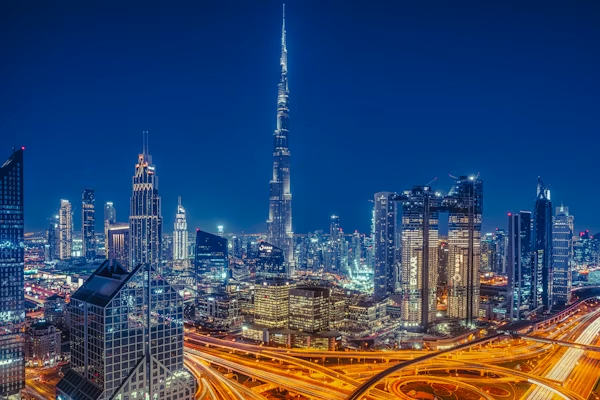
Dubai’s economy continued to register a robust growth rate of 4.4% in the first half of 2025, reaching a total of AED 241 billion (approximately $65.6 billion), despite global economic instability. This demonstrates that the city’s diversification efforts are yielding results, supporting its vision of becoming one of the top-ranking urban economies worldwide. Major sectoral performers include healthcare, construction, real estate, finance, and trade.
Statistics released by the Data and Statistics Establishment, cited by Emirates News Agency (WAM), indicate that the second quarter of the year recorded an even stronger performance, with GDP growth of 4.7% at AED 122 billion. This reflects a broad-based recovery rather than reliance on a single sector.
Momentum Builds in the Second Quarter
The growth during the April–June period reflects overall economic momentum. Analysts attribute this to rising domestic demand, increasing investment, and a supportive business environment, which have helped mitigate the effects of global inflation and geopolitical pressures.
Dubai’s Crown Prince, Sheikh Hamdan bin Mohammed bin Rashid Al Maktoum, credited the increase to leadership and coordinated efforts across the government, corporations, and investors. “Each point of growth demonstrates the collective work behind the scenes and the ability to turn challenges into economic opportunities,” he noted.
Healthcare Emerges as the Fastest-Growing Industry
Healthcare and social activities recorded the highest growth among all industries, surging 20% in the first six months of 2025. Although the sector represents just 1.4% of Dubai’s GDP, its value now stands at AED 3.3 billion, driven by rising demand for health services.
This city aims to become a regional healthcare destination through medical tourism programmes, health technology adoption, and public-private collaboration. The sector’s rapid growth also aligns with broader national objectives to enhance quality of life and transition to a knowledge-based economy.
Construction and Real Estate Continue Strong Performance
The construction sector expanded by 8.5%, adding AED 16 billion and contributing 6.7% to GDP, driven by infrastructure, housing, and commercial development to meet population growth.
Meanwhile, real estate grew 7%, contributing 8.2% to GDP with a total value of AED 19.8 billion. This growth was fuelled by a 40% surge in property sales, rising investor demand, an influx of high-net-worth individuals, and Dubai’s global reputation as a secure investment destination.
Financial Services and Trade Maintain Momentum
Finance and insurance expanded by 6.7% to AED 30.2 billion, reflecting increased lending and robust capital market activity. Dubai’s strategic position as the Middle East’s financial hub continues to support this growth.
“The wholesale and retail trade industry, which accounts for roughly one-quarter of Dubai’s economic activity, grew 4.4% to AED 57.4 billion,” the report said, attributing this to tourist arrivals, spending, and Dubai’s reputation as a global trade and logistics hub.
Alignment with Dubai Economic Agenda D33
The strong performance in H1 2025 advances the Dubai Economic Agenda D33, which aims to double the emirate’s economy over a decade and place it among the top three city economies globally.
Helal Saeed Almarri, Director General of the Dubai Department of Economy and Tourism, highlighted the adaptability of Dubai’s economy amid global changes and emphasised the role of public-private partnerships in driving growth.
Hamad Obaid Al Mansoori, Director General of Digital Dubai, said: “This data reflects the vibrancy of our economy and the success of our digital transformation initiatives.”
Data-Driven Governance and Business Confidence
Younus Al-Nasser, CEO of the Dubai Data and Statistics Establishment, attributed the positive outcomes to effective coordination between government and private institutions, ensuring timely and accurate statistical reporting.
“Dubai’s success is the result of a business environment that is agile, scalable, and innovative,” stated Hadi Badri, CEO of the Dubai Economic Development Corporation. “Economic diversification remains a key focus as the city navigates a rapidly changing global environment.”
Conclusion
Dubai’s 4.4% economic growth in the first half of 2025 is a testament to its holistic development strategy. Key sectors—including healthcare, construction, real estate, finance, and trade—have collectively contributed to the city’s resilience amid global challenges. As the Dubai Economic Agenda D33 progresses, continued innovation, digitalisation, and public-private collaboration are expected to position the emirate as one of the world’s most competitive urban economies.