

FAB Named China’s Yuan Clearing Bank in GCC Region
- Banks Business Companies Financial Services GCC World
 Global Business Magazine
- 5 minutes read
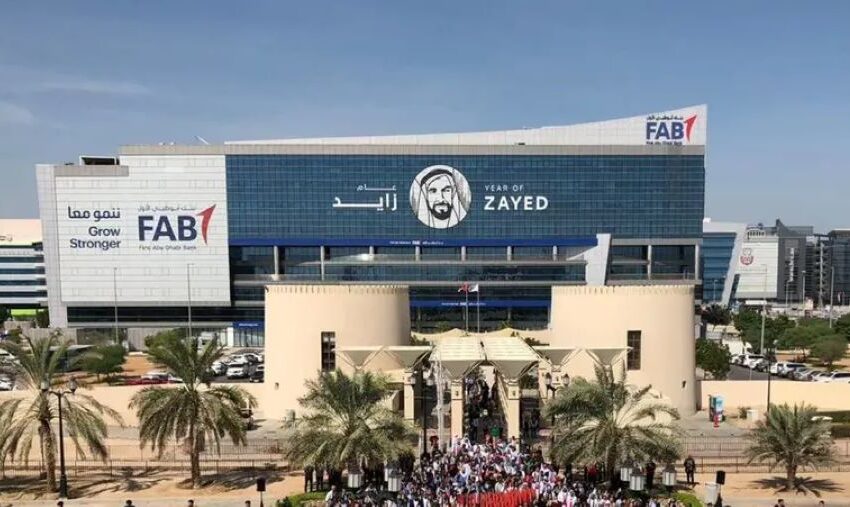
The People’s Bank of China (PBOC), China’s central bank, has signed a Memorandum of Understanding (MOU) with the First Abu Dhabi Bank (FAB), authorising it to be the first local bank in the Gulf region to serve as an RMB clearing bank.
Financial cooperation between the UAE and China has continued to deepen in recent years. In the first nine months of this year, the cross-border RMB receipt and payment volume reached $121.7 billion), representing a year-on-year increase of 20%, according to media reports.
PBOC Deputy Governor Xuan Changneng said that they look forward to FAB launching more innovative cases for the international use of RMB to promote the development of the offshore RMB market.
“China has a complete industrial chain, a broad market and strong innovation capabilities. We welcome various UAE entities to increase investment in RMB assets and share China’s development dividends,” Xuan said.
Omar Hafeez, group head of international banking of FAB, said that the move aligned with the global trend of currency diversification, the reports said.
“It reflects a natural progression driven by the need to reduce transaction costs, mitigate foreign exchange risks and address settlement uncertainty between China and the UAE”” Hafeez added.
China now stands as the UAE’s fourth-largest source of foreign direct investment and its largest trading partner for non-oil trade. Over 15,000 Chinese companies operate in the UAE. From January to September this year, the bilateral trade volume has exceeded $76.8 billion.
Cross Border Cooperation Stressed
Mohammad Alhawi, undersecretary of the UAE’s Ministry of Investment, said that competitiveness is not achieved in isolation, but depends on cross border cooperation.
Alhawi said that China is one of the world’s most dynamic investment destinations underpinned by sophisticated capital markets, deep institutional expertise and a growing role in shaping global financial innovations and the UAE is proud to be among the earliest to participate in the Belt and Road Initiative.
This month, the Industrial and Commercial Bank of China (ICBC), assisted the Emirate of Sharjah in raising $280 million from a three-year panda bond — a yuan-denominated bond issued by overseas institutions in the Chinese onshore market.
ICBC President Liu Jun said that the achievements in China-UAE financial cooperation lie in the strong economic structural complementarity. Going forward, Liu said the two sides should continue to improve the green investment and financing system and support sectors such as photovoltaic power and low-carbon transformation.
They should also advance cooperation in cutting-edge fields such as artificial intelligence, the internet and smart cities.
As Chinese high-tech enterprises are stepping up their investment in the UAE, Zhang Yiming, China’s ambassador to the UAE, said the UAE’s sovereign capitals are also looking eastward, focusing on China’s infrastructure and new energy vehicle sectors.
“”Financial cooperation between China and the UAE has become a model for practical cooperation between China and Arab countries. This is a stride toward higher quality, broader scope and deeper level of cooperation,” he said.
UAE SWF Investments
Meanwhile, the UAE’s sovereign wealth funds have actively carried out investments in stocks, bonds, private equity and other areas in China. Abu Dhabi’s Mubadala Investment Company was approved as a qualified foreign limited partner this year.
Stanley Sun, director at Mubadala’s Asia private equity platform, said that the sovereign wealth fund is really proud to bring some leading Chinese companies to the Gulf region. It’s not just the financial returns, but also the strategic importance of being able to bring them to help the Gulf economies advance and grow, he pointed out.
“As for the investment in China, we are very focused on building our exposure in retail, healthcare, and industrial technology, mobility and sustainability — all the key pillars of the Chinese economy,” he added.