


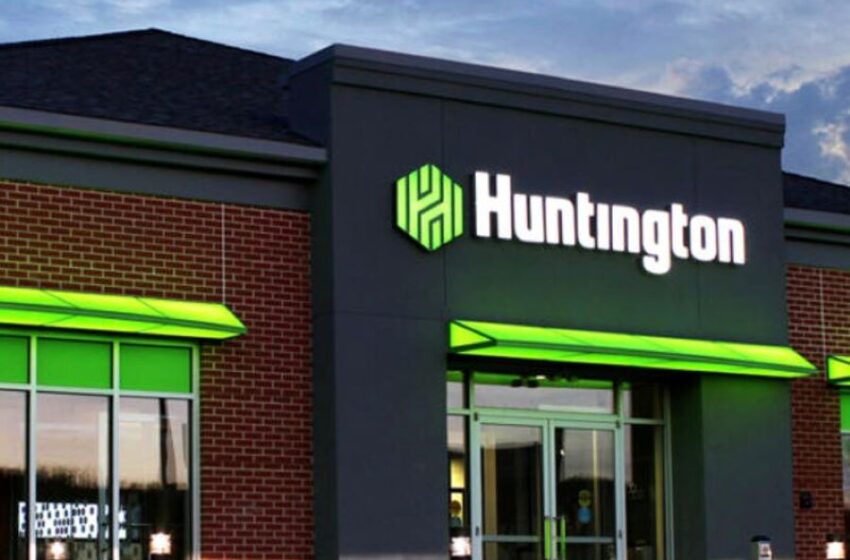
Huntington to Acquire Cadence Bank for $7.4 Billion
- Banks Business Companies Mergers and Acquisitions US
 Global Business Magazine
- 5 minutes read
The spree of mergers in the US banking sector continued with the Columbus-headquartered Huntington Bancshares Inc., on Monday announcing that it has agreed to acquire Cadence Bank, a $53 billion regional bank headquartered in Houston, Texas and Tupelo, Mississippi, in a $7.4 billion deal.
The transaction is expected to close in the first quarter of 2026, subject to regulatory approvals, approval by Huntington and Cadence shareholders and other customary closing conditions. Upon conversion, which is expected in the second quarter of 2026, Cadence Bank teams and branches will operate under the Huntington Bank name and brand.
With more than 390 locations across Texas and the South, the addition of Cadence marks a significant milestone in Huntington’s strategic growth. Upon close, Huntington will also become the number one bank in Mississippi and a top ten bank in both Alabama and Arkansas by deposits.
The partnership, in conjunction with the recently closed acquisition of Veritex Community Bank, will give Huntington the fifth deposit market share in Dallas, the fifth deposit market share in Houston, and the eighth deposit market share across the state of Texas.
The partnership will give Huntington a foothold in high-growth markets including Houston, Dallas, Fort Worth, Austin, Atlanta, Nashville, Orlando and Tampa, and create a powerful platform for further organic growth and investment.
Upon completion, Huntington will have a strategic presence in 12 of the top 25 metropolitan statistical areas (MSAs) in the country, including six of the top 10 fastest growing MSAs.
Huntington Bancshares Chairman, President and CEO Steve Steinour said that the merger is an important next phase of growth for Huntington.
He added: “This partnership will extend the reach of our full franchise to 21 states—stretching from the Midwest to the South to Texas—and into new, high-growth markets for which we have a powerful playbook. Today’s announcement represents a significant step on our journey to be the leading people-first, customer-centered bank in the country.”
One of the largest regional banks in its footprint, Cadence operates branches across Alabama, Arkansas, Florida, Georgia, Louisiana, Mississippi, Missouri, Tennessee, and Texas. Huntington intends to maintain Cadence’s broad branch network—with no branch closures—and invest to grow.
Cadence Bank Chairman and CEO James D Rollins III said that they have been delivering for the bank’s customers and communities for 150 years, and partnering with Huntington will help them do even more to support those they serve.
“This is a defining moment for Cadence Bank and we are confident this alignment will create lasting value across our footprint and beyond. Together, we will continue to prioritize relationship-first banking while unlocking new opportunities for growth and innovation,” he added.
Upon closing of the transaction, Rollins will join Huntington as non-executive Vice Chairman of the Board of Directors of Huntington Bancshares Incorporated as well as a director of Huntington Bancshares Incorporated and The Huntington National Bank. Huntington Bancshares will be inviting two additional members from Cadence to join the Board of Directors.
Brant Standridge, President of Consumer and Regional Banking at Huntington said that Cadence Bank’s relationship-first, community-based approach to banking aligns very well with their values and local approach to banking.
“Cadence has built strong relationships over generations, and we intend to continue that legacy and offer even more with our leading digital capabilities and Fair Play products and services, Standridge added.
Transaction Terms
Under the terms of the agreement, Huntington will issue 2.475 shares of common stock for each outstanding share of Cadence common stock in a 100% stock transaction. Based on Huntington’s closing price of $16.07 as of 24 October 2025, the consideration implies $39.77 per Cadence share.
The transaction is expected to be 10% accretive to Huntington’s earnings per share, mildly dilutive to regulatory capital at close, and 7% dilutive to tangible book value per share with earn-back in three years inclusive of merger expenses.