


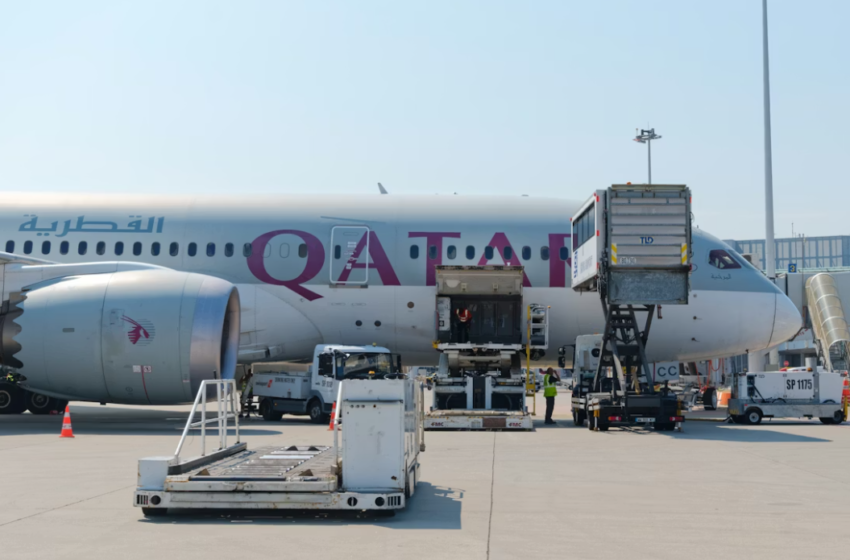
Qatar Reopens Skies to International Carriers, Signaling Aviation Recovery
- News
 Global Business Magazine
- 10 minutes read
Gradual return of foreign airlines marks key milestone after weeks of regional disruption
Qatar has begun a phased reopening of its airspace to international airlines, allowing foreign carriers to resume operations for the first time since the onset of regional conflict involving Iran and the United States. The move is being seen as a major step toward restoring global aviation connectivity in the Gulf region, following weeks of severe disruptions that impacted flight operations, passenger movement, and airline schedules.
Foreign Airlines Return After Weeks of Suspension
According to the Qatar Civil Aviation Authority, a formal notice (NOTAM) has been issued permitting the gradual resumption of foreign airline operations via Hamad International Airport.
Authorities confirmed that the decision followed a comprehensive safety and operational assessment, conducted in coordination with national agencies to ensure readiness.
- International carriers will return in phases
- Operations will follow strict global aviation safety standards
- Passenger and crew safety remains the top priority
This marks the first time since late February that Qatar has fully reopened its airspace to non-domestic airlines.
Background: Conflict Forced Airspace Closure
Qatar had shut its airspace amid escalating regional tensions, including missile and drone activity across the Gulf.
During this period:
- Commercial flights were largely suspended
- Only limited operations by national carrier Qatar Airways were allowed
- Emergency and repatriation flights operated under controlled corridors
The disruption left thousands of passengers stranded and significantly impacted global flight networks.
Aviation Sector Begins Gradual Recovery
The reopening comes as part of broader efforts to normalise aviation operations in the region.
Recent data indicates that:
- Qatar Airways has already restored over 50% of its pre-conflict flight schedule
- International routes are gradually being reinstated
- Airlines are adjusting schedules to meet returning demand
The phased approach is designed to avoid congestion and maintain operational efficiency while rebuilding connectivity.
Boost for Global Connectivity and Travel
Qatar’s strategic location makes it a key hub connecting Europe, Asia, and Africa.
The reopening of its airspace is expected to:
- Restore major international transit routes
- Reduce travel delays and rerouting costs
- Improve airline operational efficiency
- Support global tourism and business travel recovery
Airlines that previously avoided the region due to safety concerns are now preparing to reintroduce routes through Doha.
Economic and Trade Implications
The aviation sector plays a critical role in Qatar’s economy, supporting:
- Tourism and hospitality industries
- Cargo and logistics operations
- International business travel
The return of foreign airlines is likely to have positive ripple effects across multiple sectors, particularly as global supply chains and passenger flows stabilize.
Safety Measures Remain Central
Authorities have emphasized that all resumed operations will adhere to:
- International aviation safety standards
- Enhanced monitoring and coordination protocols
- Continuous risk assessments
The cautious, phased reopening reflects the need to balance operational recovery with ongoing regional uncertainties.
Outlook: Gradual Normalisation Ahead
While the reopening marks a significant milestone, full recovery of air traffic is expected to take time.
Key factors influencing the pace of recovery include:
- Stability in the broader geopolitical environment
- Passenger confidence and travel demand
- Airline capacity and route planning
Experts believe that if current conditions hold, Qatar could soon regain its position as a leading global aviation hub.
Qatar’s decision to reopen its airspace to foreign airlines signals a turning point in the region’s aviation recovery, offering renewed optimism for travelers, airlines, and global markets alike.
As international carriers return and operations scale up, the move reinforces Qatar’s role as a critical connector in the global aviation network.