

Saudi to Borrow $37 Billion to Cover Budget Deficit
- Budget Finance Public Debt Regional
 Global Business Magazine
- 4 minutes read
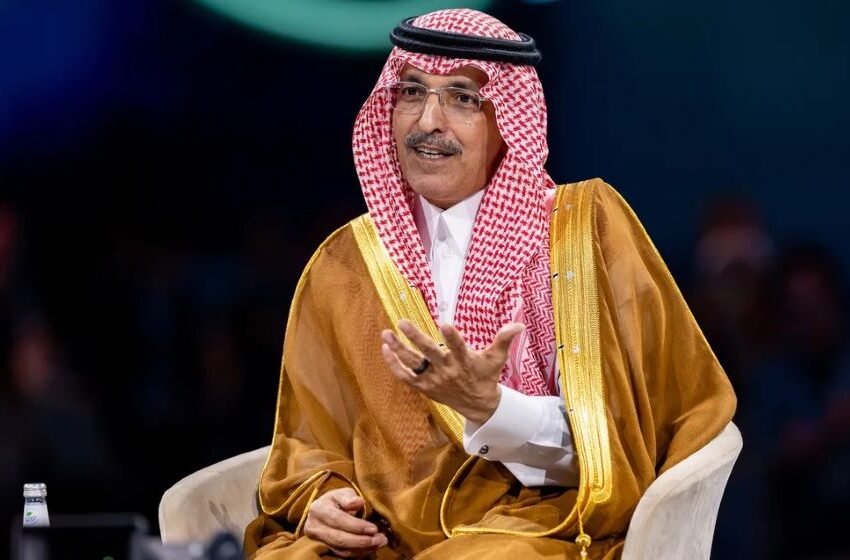
Saudi Arabia’s Finance Minister Mohammed bin Abdullah Al-Jadaan has approved the annual borrowing plan for the fiscal year 2025, which was ratified by the Board of Directors of the National Debt Management Centre.
According to the plan, the government has outlined a requirement of $37.01 billion for the current year to cover the expected deficit in the state’s general budget, estimated at $26.90 billion, in addition to pay the principal debt dues amounting to $10.12 billion.
The budget deficit is expected to be 2.3% of GDP this fiscal year and to continue at similar levels over the medium term as the government continues to invest heavily in the diversification agenda, according to the Budget for 2025.
There are no plans for major changes to tax policies next year or in the foreseeable future, Finance Minister Mohammed Al Jadaan said after announcing the budget. However, the government intends to take measures to improve compliance with existing tax policies.
The government is also focused on supporting growth rather than burdening the economy with higher taxes, as economic growth will lead to greater public revenue via taxes and other means such as tapping local and foreign debt markets as it looks to benefit from the interest rate reversal and decreased cost of borrowing.
This will also involve new bond and sukuk issuances for domestic and external markets in both local and foreign denominations, as well as alternative financing, he said.
Deficits ranging between $26.63 billion and $37.28 billion can be beneficial, as long as the returns on public spending exceed the cost of borrowing. This rationale anchors the government’s attitude towards fiscal expansion in 2025, 2026, and 2027, the Minister explained.
“At the same time the government is mindful that fiscal expansion is only sustainable if debt is accessible at reasonable cost. Moreover, deficits should not overload the domestic economy and cause inflation. This balance is very important,” Al Jadaan said.
Deficit to Continue
The budget deficit is expected to “continue at similar levels over the medium term” as the government continues to invest heavily in the diversification agenda, according to the finance ministry.
To enhance the sustainability of the Kingdom’s access to various debt markets and broaden the investor base, Saudi Arabia aims to continue diversifying local and international financing channels to efficiently meet funding needs.
This will be achieved through the issuance of sovereign debt instruments at fair pricing, guided by well-defined and robust risk management frameworks.
Additionally, the government plans to benefit from market opportunities by executing private transactions that can promote economic growth, such as export credit agency financing, infrastructure development project financing, capital expenditure (CAPEX) financing, and exploring tapping into new markets and currencies based on market conditions.
According to the data released by Saudi Arabia’s General Authority for Statistics, the debt-to-GDP ratio remains within acceptable levels and in line with the Kingdom’s medium-term debt strategy, reaching 29.7% compared to 26.2% by the end of 2023.