

The second UAE pipeline around the Strait of Hormuz is 50% complete, says Al Jaber
- News
Global Business Magazine Admin
- 5 minutes read
The ADNOC chief says the UAE is hastening the delivery of its pipeline to 2027 following the military conflict in the region involving the United States, Israel, and Iran.
According to Sultan Ahmed Al Jaber, the UAE’s Minister for Industry and Advanced Technology and Group Chief Executive of ADNOC, the UAE has accelerated the development of its second pipeline, which is scheduled for delivery next year.
“It’s not only your capacity to produce energy anymore. It’s about your pipelines, ports, storage, and redundancy. Too much of the world’s energy relies on too few chokepoints of passage in the world when it comes to energy transportation. This is precisely what led the United Arab Emirates to take the decision to build its infrastructure without going through the Strait of Hormuz,” he told the Atlantic Council in an interview.
“That is why we have gone ahead to develop our second pipeline in 2025. Currently, it is close to being 50% completed, and we are speeding up its delivery to 2027,” he concluded.
He also stated that the oil sector is “dangerously underinvested”.
According to Sultan Ahmed Al Jaber, present-day investment in upstream activities amounts to nearly $400 billion a year, which is just enough to counter the natural depletion rate in oil extraction.
The global spare capacity is roughly three million barrels per day, and it should be about five million barrels per day. Within two months, there was a reduction of about 250 million barrels from stockpiles. We have 30-35 days’ worth of effective cover, and we must at least double that, he stated during a virtual interview.
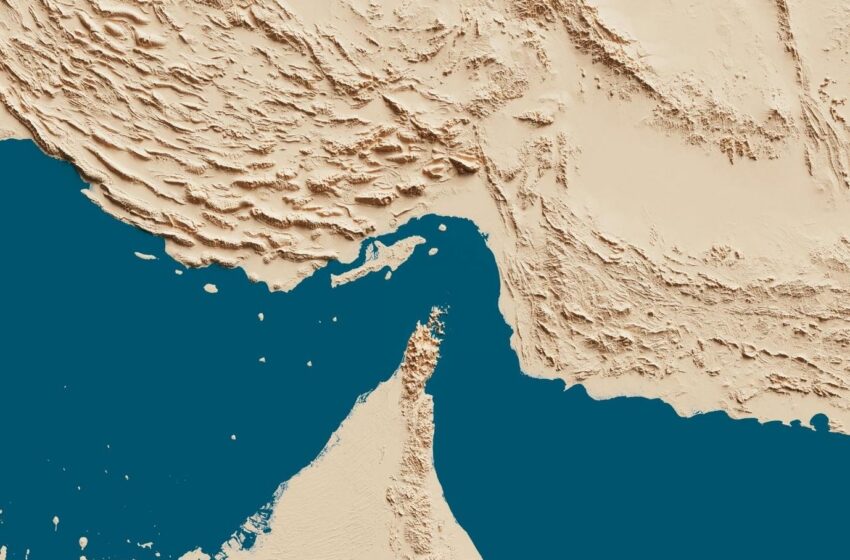
As a result of the shutdown of the Strait of Hormuz in February following the onset of the war between the United States, Israel, and Iran, the global supply of oil was significantly interrupted, as about 20 million barrels of oil flow daily through the strait.
The UAE has also been diverting some of its oil production via ports like Fujairah, which lies along the Indian Ocean, without going through the Strait of Hormuz.
This new pipeline will certainly increase the volume of Abu Dhabi’s exports and improve its security.
One hundred million barrels lost per week
As Sultan Ahmed Al Jaber pointed out, closing the Strait of Hormuz would be the worst oil supply shock in history.
Thus far, the world has already lost more than a billion barrels of oil, a figure that continues to rise by nearly 100 million barrels every week. He added that the price of Brent crude was trading at 40 per cent above pre-closure prices of the Strait of Hormuz.
He went on to say: “It’s not all about oil. This is about liquefied natural gas (LNG), jet fuel, fertilisers, ammonia, urea, aluminium, helium, critical minerals, plastics, consumer goods, and general cargo items.”
In other words, everything in the modern-day global economy’s supply chain — from the food you eat to the flights overhead and even the chipsets in your mobile phone — is under threat as fuel prices climb higher, he said.
Recovery
As observed by Sultan Ahmed Al Jaber, even if peace is achieved tomorrow in the Middle East, it will take at least four months for oil flows to return to 80% of pre-conflict levels, with full recovery not expected until the first or second quarter of 2027.
However, it is not only about economics. Indeed, it creates an alarming precedent when one nation has the capability to hijack the world’s most vital shipping route. This marks the end of freedom of navigation as we have known it, he added.
“He who refuses to do so will find himself grappling with the implications for the rest of the decade,” he went on to say.