

Dubai hotels bounce back: Guests will come back before prices do, says Accor
- Business Leisure travel
 Global Business Magazine
- 9 minutes read
According to Accor, Dubai’s hotel industry is now set to witness a recovery in visitor numbers before prices return to pre-war levels
Dubai, like any other regional market, was impacted by the disruption caused by reduced travel demand; however, the firm’s regional leadership expects international visitor numbers to improve gradually as connectivity resumes and major events are held.
Furthermore, the French hospitality giant has assured that it is on track with its plans for expansion in the Middle East, where uncertainty will not affect its long-term plans for the region.
Accor is among the largest hospitality groups globally and operates several hotel chains such as Fairmont, Mövenpick, Raffles, Pullman, Novotel, Grand Mercure, and others. “We have 380 hotels here so we are a big player here… we are the largest player in the Middle East,” said Duncan O’Rourke, CEO of Middle East, Africa and Asia Pacific.
The hotel group owns 380+ properties (101,000+ keys) across the Middle East, Africa & Türkiye region, with more than 180 properties currently under development.
“You will have the volume, you won’t see the rates,” said O’Rourke regarding room rates, further noting that it would take more time before room rates return to the same figures that were registered in January and February of this year. “Accor will reach its pre-war performance figures by Q1/Q2 2027,” said O’Rourke.
“You will see the volumes coming back, but you won’t get the rates right away like it was in January and February; you’ll see the volumes, but you won’t see the rates,” said O’Rourke.
His remarks follow a period in which Dubai has remained undeterred from continuing with its tourism plan, even amid recent uncertainties surrounding the US-Israel-Iran issue.
Issam Kazim, CEO of the Dubai Corporation for Tourism and Commerce Marketing, made this statement at the first stakeholder meeting held by the Dubai Economic Task Force recently.
“We are still committed to achieving our D33 objectives,” remarked Kazim. “It hasn’t changed.”
Hotel revenue per available room in the United Arab Emirates declined by 53 per cent in March, year-on-year, according to a Barclays report, as recent developments in the Strait of Hormuz have affected travel patterns in the Gulf region. UAE hotels are introducing various packages to increase local expenditure.
Hotel room rates will not decrease permanently
According to Accor, there were fears that discounting hotel rooms would lead to a long-term decrease in room prices. This kind of fear was also experienced during the tourism boom that followed the COVID-19 period.
“Everybody says that all the prices that we don’t really have [referring to the revenge travel period],” said Accor’s deputy CEO, Jean-Jacques Morin. “Do you know what? Nothing has happened, and even after three or four years, prices remain the same.”
“However, when talking about post-COVID challenges faced by our organisation, the major concern wasn’t the prices but the occupancy,” he said. “The only thing that we haven’t recovered from the COVID-19 pandemic is the occupancy.”
“We see that there is a shift in customer spending behaviour in our hotels, with customers being very much interested in their vacations, while making adjustments to other aspects of their spending behaviour,” Mr Morin noted.
No cutbacks
While Dubai continues its efforts toward developing its events schedule, promoting tourism, infrastructure development, and aviation capacity beyond the temporary effect on travel demand, Accor is similarly optimistic.
Morin indicated that the firm had maintained its regional policy since the region still had the same future potential for growth as before. This was because the region’s achievements depended on long-term planning, with governments and companies continuing to work on their vision for the next ten years.
“This region works well because you have to do a ten-year plan,” Morin commented, noting that investment and confidence in the future growth of the region were important factors.
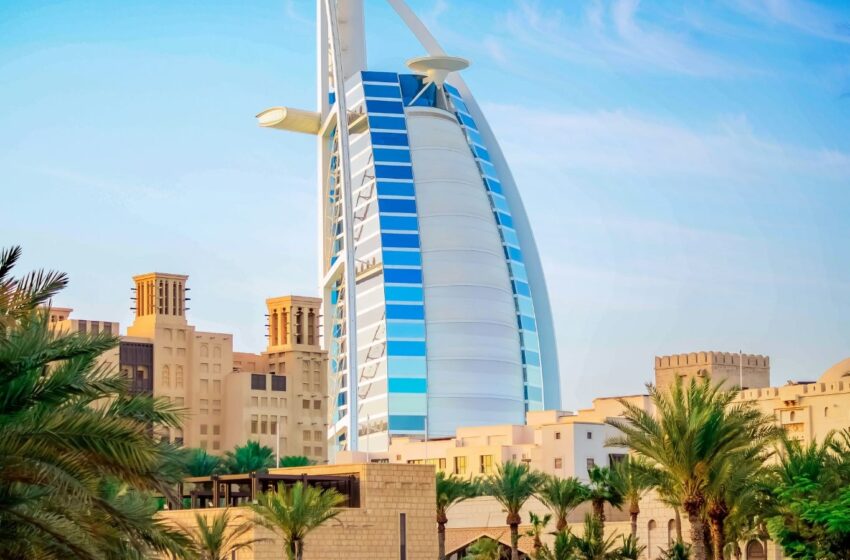
To overcome this slow phase, several hotels in Dubai, such as Burj Al Arab, Armani Hotel Dubai, Park Hyatt Dubai, and Anantara World Islands Dubai Resort, are being renovated during this period.
Four properties owned by Accor are currently undergoing renovations, as pointed out by O’Rourke.
Hotel employees retained
According to Accor, it prioritised maintaining its workforce through periods of uncertainty rather than immediately laying off workers. The firm indicated that it had learned lessons from the COVID-19 pandemic regarding the difficulties created by downsizing personnel.
“When they start laying people off, there is the expense of bringing them back and retraining them — there has been a huge learning curve in this case,” said O’Rourke.
The organisation says it relocated staff within hotels and markets when possible. This has included initiatives such as assisting with refurbishments and moving staff to other countries.
Demand for long-stay hotels is on the rise
Demand for long-stay hotels has also increased, as some tourists and locals have sought housing solutions amid uncertain times. According to Accor, long-stay hotels performed well since some people needed temporary housing solutions.
“Of course, there were some who didn’t have homes to go back to, and they needed somewhere, and you know what? The hotel was an excellent option,” Morin noted.
According to the firm, serviced apartments have grown in significance within the hospitality industry because consumers want a middle ground between hotels and residences.
About Accor
Accor is a multinational hospitality firm based in France that provides ownership, management, and franchising services for hotels, resorts, and vacation destinations. Accor is the biggest hospitality company in Europe, as well as the sixth biggest hospitality company globally.
Accor runs 5,836 locations across more than 110 countries. The total capacity of the firm amounts to around 881,427 rooms (as of December 2025). More than 40 hospitality brands are owned and operated by Accor, namely luxury brands (Orient Express, Raffles, Fairmont, Sofitel), premium brands (Pullman, Swissôtel), midscale brands (Novotel, Mercure, Adagio), and economy brands (ibis, hotelF1). In addition, Accor runs companies specialised in digital hospitality and event organisation, including onefinestay, D-Edge, ResDiary, John Paul, Potel & Chabot, and Wojo.
The firm is headquartered in Issy-les-Moulineaux, France, and is listed on the Paris stock exchange within the CAC Next.