

Middle East’s Aviation to Add $730 Billion to GDP by 2043
- Business Aviation Companies GDP Middle East
 Global Business Magazine
- 6 minutes read
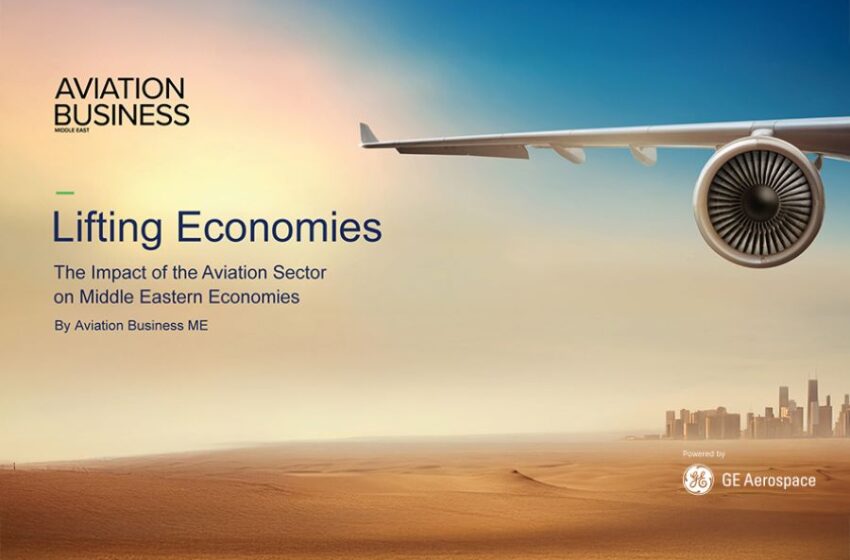
The aviation sector in the Middle East is positioned for unprecedented growth over the next two decades, with total aviation-related jobs projected to increase by 134%, the highest growth rate of any region globally, according to a white paper released by the Aviation Business ME and GE Aerospace.
The report entitled “Lifting Economies: The Impact of the Aviation Sector on Middle Eastern Economies,” revealed that the aviation’s contribution to regional GDP will surge by more than 150% by 2043, reaching $730 billion and cementing the industry’s position as a key driver of economic development across the region.
More than 530 million passengers, twice the current number, are projected to travel through the region, with a 3.9% annual traffic growth rate, the report said.
Several key factors are fuelling this growth trajectory. Middle Eastern governments have made strategic, long-term commitments to aviation through massive infrastructure investments, airline development, and supportive regulatory frameworks.
This government-led approach, combined with the region’s unique geographic position connecting major global markets, has created the right conditions for positive aviation sector impact.
The Middle East’s location between Europe, Africa and Asia-Pacific also positions its airlines and airports to capture significant transfer traffic.
Growing populations, coupled with rising regional prosperity and ambitious tourism targets in much of the surrounding region, create substantial demand. Two of the top 10 busiest airports for international passenger traffic are in the Middle East, with Dubai ranking first globally at present, the report said.
Aviation Business Middle East Editor Ryan Harmon said: “As we look toward 2040, the countries that continue to invest strategically in their aviation ecosystems will reap outsized rewards in economic diversification, skilled job creation, and global connectivity.
“What’s particularly encouraging is seeing how governments across the region are embracing next-generation technologies and sustainable practices that will ensure this growth benefits both their economies and the planet,” he said.
Aziz Koleilat, President and CEO – Middle East, Turkiye, & CIS at GE Aerospace, said that the Middle East aviation story isn’t just the scale of growth, but how the region has pioneered new models of industry development.
“By simultaneously investing in airlines, airports, infrastructure, and MRO capabilities, countries are creating integrated aviation ecosystems that will deliver economic benefits far beyond traditional air transport metrics,” Koleilat said.
Saudi Arabia’s Growth Story
This paper has a particular focus on Saudi Arabia, which stands out as one of the region’s most dynamic growth stories. The Kingdom has seen the Middle East’s largest percentage jump in aviation-related jobs between 2016 and 2023, rising 136% to 1.4 million positions.
The country’s aviation sector GDP contribution increased more than 150% to $91 billion during the same period. The Saudi Aviation Strategy, backed by $100 billion in investments, aims to triple annual passenger traffic to 330 million, extend connectivity to more than 250 destinations from 29 airports, and increase air cargo volumes more than five-fold to 4.5 million tons by 2030.
Elsewhere in the region, the UAE continues to demonstrate aviation’s economic impact, with the sector contributing 18.2% to national GDP – more than five times the global average of 3.9%. The UAE employs one-third of all direct aviation jobs in the region.
Finally, the aviation sector in Qatar has been identified as a key enabler of the Third Qatar National Development Strategy 2024-2030, specifically by expanding its air transport activities and positioning its logistics cluster as a specialized e-commerce distribution hub.
Bright Future
Regional investments in artificial intelligence (AI) will accelerate implementation across aviation operations, from predictive maintenance to fuel optimisation by pilots.
The Middle East governments and airlines are positioning themselves as adopters of sustainable aviation fuel (SAF) initiatives, with the UAE targeting 700 million liters of SAF production annually by 2030 and Saudi Arabia building infrastructure to support SAF development as part of megaprojects such as NEOM.
As regional space programs develop in countries like the UAE, Saudi Arabia, and Oman, they will create new opportunities for the aerospace sector through overlapping specialized manufacturing, IT, and engineering skills.