

UAE Banks Put Up Robust Performance in Second Quarter

Stable profitability and robust real estate transactions underpinned UAE banks’ performance in the second quarter of this year, even as impairments increased while the UAE economy remained resilient with stable fiscal buffers, moderate growth and steady liquidity despite global and regional headwinds, A&M said.
In its latest UAE Banking Pulse report for Q2, A&M said that the aggregate total interest income increased by 4.1% q-o-q while the Net Interest Income rose 1.3% q-o-q as lending momentum gathered pace for the UAE banks.
The aggregate net income was broadly flat (0.2% q-o-q), despite an 8.7% decline in total non-interest income. Higher operating expenses (1.6% q-o-q) and impairment charges (81.1% q-o-q) impacted the UAE bank’s profitability during the quarter.
Lending exposure to the real estate and construction sector declined to 13.3% in Q1 2025 as against 14.1% in Q1 of 2024, a sharp decline since last quarter. However, Dubai’s real estate market demonstrated robust growth through the second quarter, with residential property prices rising about 20.5% y-o-y.
Total residential transaction value grew by 44% y-o-y and 23% y-o-y for Dubai and Abu Dhabi, respectively in the second quarter, and the net L&A for banks increased by 5% q-o-q, while deposits growth slowed down to 2.8% q-o-q in the second quarter, the report said and noted that the loan to deposit ratio (LDR) increased to 76.2% q-o-q, improving by 156bps during the same period.
New Developments
Botim partnered with Mbank to become UAE’s first fintech to enable Jaywan card issuance, integrating the national card scheme into PayBy services during the quarter.
Emirates Development Bank (EDB) launched $272 million Emirates Growth Fund to back high potential UAE SMEs between $$2.72 million and $13.61 million equity investments, driving industrial growth.
MoneyHash and Lean Technologies partnered to enable instant account-to-account (A2A) “pay-by-bank” payments for UAE merchants, the report said.
Tarabut became the first MENA fintech to secure Open Finance licences in Bahrain, Saudi Arabia and the UAE, following the UAE’s new Open Finance regulation while Emirates NBD partnered with Appro to cut retail onboarding time to three minutes through streamlining KYC, credit checks, and due diligence.
FAB’s Commitment
First Abu Dhabi Bank (FAB) committed $2.72 billion in partnership with Ministry of Industry and Advanced Technology (MoIAT) to boost the UAE industry through competitive financing for manufacturers, supporting innovation and the “Make it in the Emirates” initiative.
Ras Al Khaimah Economic Zone (RAKEZ) signed MoU with Abu Dhabi Islamic bank (ADIB) to fast-track account opening and provide investors instant access to Sharia-compliant business banking.
The Central Bank of UAE (CBUAE) and fintech Mercury launch Unitey Business Services, a public-private JV under the FIT programme to modernise the UAE payments infrastructure.
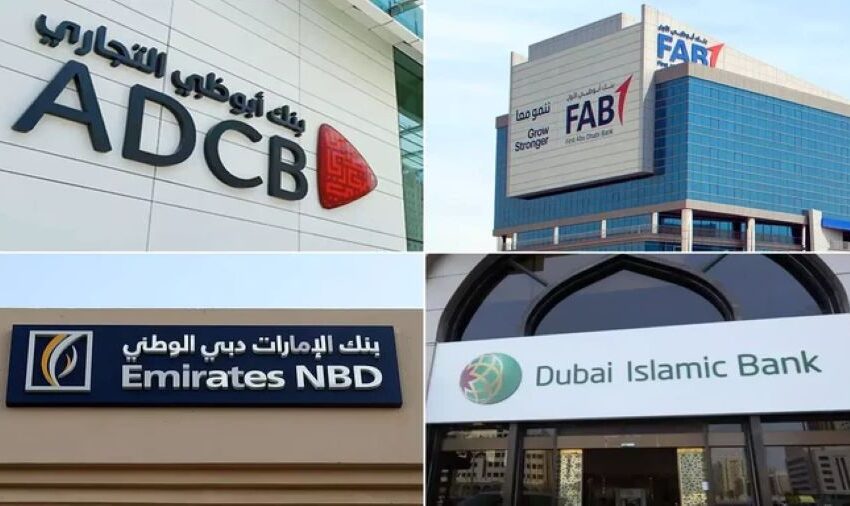
MoIAT secured over $10.89 billion in partnerships with five UAE banks—FAB, Emirates NBD, Abu Dhabi Commercial Bank (ADCB), ADIB, and Wio Bank—boosting industrial innovation, SME growth, and tech adoption.
Agentic AI
The UAE banks have adopted ‘Agentic AI’ to handle credit sanctioning, marking a significant leap in their digital banking transformation and ENBD partnered with iPiD to enable real-time beneficiary validation for cross-border payments. This system aims to reduce fraud and improve payment accuracy.